By the end of your wedding day, your dress will carry a few reminders of the celebration: a bit of grass near the hem, a touch of makeup at the neckline, maybe even a hint of champagne from a toast. These marks are signs that your dress was part of the story. What matters most is how you care for it once the day is done.
Wedding dress preservation is one of those tasks that is easy to put off. You are tired, you are newly married, you might be leaving for a honeymoon in two days. But the choices you make in the first few weeks after your wedding decide whether your dress becomes a keepsake or a garment bag you feel guilty about for the next decade.
Why Preservation Matters More Than You Think
Most damage to a wedding dress doesn't happen on the wedding day. It happens in the months after, quietly, while the dress sits in a closet.
Sweat, body oils, makeup, and champagne are invisible on white fabric at first. Over weeks and months, those residues oxidize and turn yellow or brown, especially along the neckline, underarms, and hem. By the time the stain is visible, it has usually set into the fibers. This is why "it looked fine when I packed it away" is one of the most common things preservation specialists hear from brides who waited too long.
If you want to wear your dress again someday, hand it down, sell it, or turn it into something new like a christening gown or a set of keepsake ornaments, preservation is what keeps that option open.
Cleaning First, Preservation Second
Cleaning removes the stains and residue. Preservation is the packaging and storage process that protects the dress long-term. A dress that goes straight into a preservation box without proper cleaning will still develop stains over time; they will just develop inside a sealed box where you cannot see them until it is too late.
Professional wedding gown cleaners use solvent-based methods designed for delicate fabrics, beading, and lace, which is different from a standard dry cleaner. If your dress has lace, silk, or hand-sewn beadwork, look for a cleaner who specializes in bridal gowns rather than a general cleaning service.
Timing: Sooner Is Genuinely Better
Start the process within a few weeks of your wedding if you can. Stains set harder the longer they sit, and things like sugar, sweat, and body oil are notorious for being invisible originally.
That said, if it has been months or even years since your wedding, it is not too late. A qualified preservation specialist can still clean and treat an older gown. It just takes more careful handling and sometimes more time.
If you are heading straight into a honeymoon, hand the dress off to a parent or a trusted member of your wedding party before you leave. A few days sitting in a hotel garment bag will not ruin anything, but weeks will start to matter.
What Preservation Looks Like
A proper preservation box is not the same as the box your dress came in from the bridal shop. Look for these details:
- Acid-free tissue paper used to pad folds and prevent yellowing
- An acid-free, archival-quality box, not standard cardboard
- A sealed or semi-sealed environment that keeps out dust, light, and insects
- Documentation of the cleaning and treatment process
Preservation services vary depending on your dress and region.
If You Are Storing at Home
Professional preservation gives you the best odds long-term, but if you are storing the dress yourself in the meantime, a few things matter more than people expect.
Skip the plastic garment bag for long-term storage. Plastic traps moisture, and trapped moisture leads to mildew, which is worse than the thing you were trying to prevent. Cotton muslin bags breathe and are a safer option if you are not ready for a full preservation box yet.
Fold rather than hang if the dress is heavy or beaded. Long-term hanging puts constant strain on the seams and shoulders. If you fold, use acid-free tissue between layers and stuff the sleeves and folds loosely so the fabric doesn't crease into permanent lines.
Keep it somewhere cool, dark, and stable. A closet shelf or a spot under the bed works. Attics, basements, and garages swing too far in temperature and humidity across the seasons, even in a mild PNW climate, and that fluctuation is hard on fabric over years.
What We See Behind the Camera
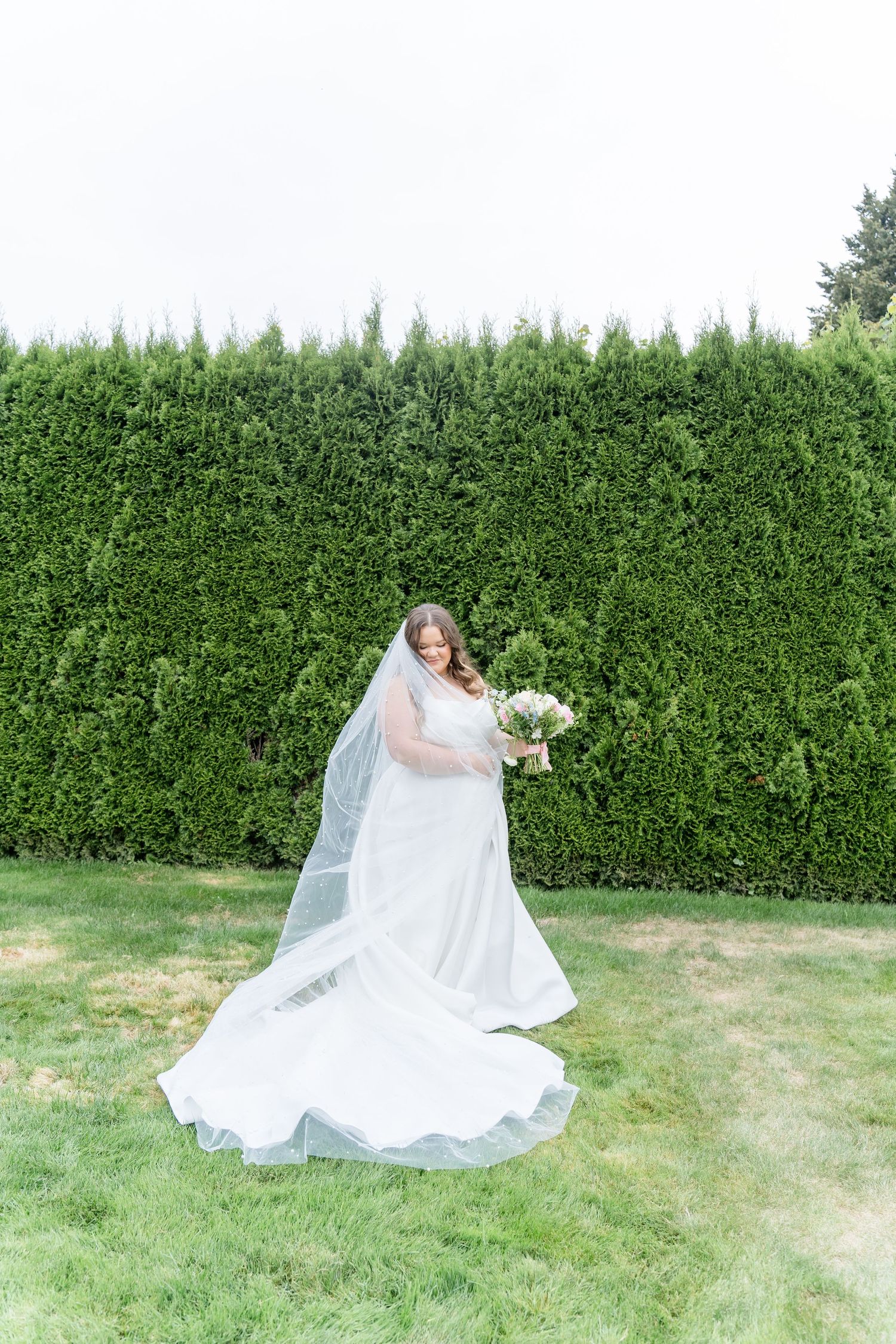
As photographers, we spend more time close to your dress on the wedding day than almost anyone else in the room. We have seen firsthand how much a dress goes through in a single day, and it is always more than brides expect. That is part of why we tell our couples not to panic about a little dirt on the hem. It is normal, and it is fixable, though it is not a reason to feel careless about the dress. It is just a reason to take the next step seriously once the day is over.
FAQ
Do I need to preserve my dress if I do not plan to wear it again? Even if you never plan to wear it, preservation protects your investment and keeps your options open. A lot of brides who were sure they would never touch the dress again end up wanting to show a daughter or granddaughter someday.
Can I preserve a dress that already has visible stains? Yes, in most cases. The sooner you start, the better your odds of full removal, but experienced preservation specialists work with stained and aged gowns regularly.
Is dry cleaning the same as preservation? No. Dry cleaning addresses visible dirt. Preservation is a full process that includes specialized cleaning plus long-term archival storage designed to prevent future damage.
Let's Capture the Day the Dress Deserves
We photograph a lot of dresses making their way through mud, grass, dance floors, and everything in between, and we love every second of it. If you're planning a PNW wedding, elopement, or adventure session, I'd love to hear about it. Reach out and let’s see which package fits your day.
Whether you're having a big wedding or something smaller, planning the perfect elopement in Washington State is worth a read for any couple who loves the idea of a simpler day.